What is a Cybersecurity framework?
Build Your Cybersecurity Strategy on the Right Framework
When you think of implementing security for your infrastructure, network, applications or any other assets, it might be difficult to know where to start. There are so many aspects of cybersecurity and cyber hygiene that it can be overwhelming.
Then there’s another angle: how do you know if what you’re doing is enough? How do you know what the baseline is? Security frameworks can help you understand what this baseline is.
Essentially, a cybersecurity framework is a structured set of best practices, standards, and guidelines designed to help businesses manage cybersecurity risks. It helps organizations identify, assess, and manage potential risks and protect their digital assets.
Benefits of using security frameworks
Security frameworks tend to be precautionary: they offer concrete steps to improve security and manage potential threats and vulnerabilities. Most cyber frameworks aren’t intended to be offensive in nature (with some exceptions, like threat hunting frameworks which, by nature, are proactive). Frameworks help kickstart your security journey, and provide you with knowledge of the steps you should take to set up the first lines of defense.
Some clear benefits include:
- Consistency. Since they provide a standardized set of guidelines and best practices, they help organizations implement consistent security measures.
- Fundamental. By following an established framework, companies can avoid reinventing the wheel and instead save time and resources by implementing well-documented processes.
- Trustworthy. Using security frameworks demonstrates an organization’s commitment to safeguarding data, which helps build trust with stakeholders, clients, and partners.
Our Available Frameworks
NIST Cybersecurity Framework
The NIST Cybersecurity Framework is one of the most widely adopted cybersecurity standards. Although it was originally created to help protect critical infrastructure such as energy, water, and transportation systems, it has since evolved into a flexible framework suitable for organizations of all sizes and industries.
Today, the NIST CSF is considered a strong baseline cybersecurity framework for any SMB, whether or not it works with government entities. It provides a clear structure for improving cybersecurity maturity and reducing risk.
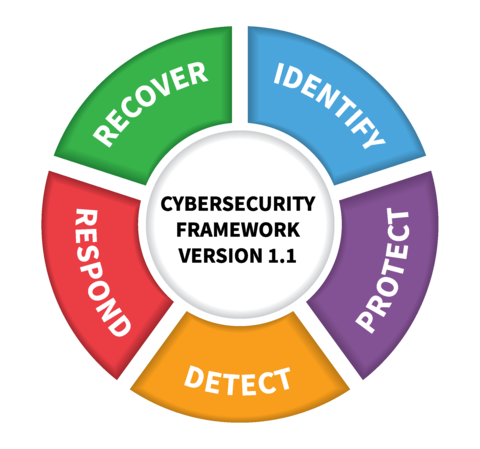
The framework focuses on six core functions which are further split into categories and subcategories.
- Identify: Identify all the assets that you need to secure and define the scope.
- Protect: Implement security best practices to ensure the security of the assets.
- Detect: Create systems to monitor what’s happening and detect any suspicious or malicious activity.
- Respond: Be prepared for when things go wrong. Inform the stakeholders and contain attacks. Here, already-established incident response plans do a lot of the work.
- Recover: Create processes and mechanisms to repair the damage and restore the state post-incident.
- Govern: Establish and monitor the organization’s risk management strategy.
NIST 800-53
NIST 800-53 is an information security standard that provides a catalog of privacy and security controls for information systems. Originally intended for U.S. federal agencies except those related to national security, since the 5th revision it is a standard for general usage. It is published by the National Institute of Standards and Technology, which is a non-regulatory agency of the United States Department of Commerce. NIST develops and issues standards, guidelines, and other publications to assist federal agencies in implementing the Federal Information Security Modernization Act of 2014 (FISMA) and to help with managing cost effective programs to protect their information and information systems.
Cyber Essentials (UK)
Cyber Essentials is a Government-backed certification scheme that helps keep your organization’s and your customers’ data safe from cyber attacks.
The NCSC recommends Cyber Essentials as the minimum standard of cyber security for all organizations.
Cyber Essentials can help every organization from micro businesses to large corporations guard against the most common cyber attacks. If you have digital assets or store any data, putting the Cyber Essentials controls in place can help you keep it safe.
ISO 27001:2022
ISO 27001:2022 offers a robust framework for managing information security risks, vital for safeguarding your organisation’s sensitive data. This standard emphasises a systematic approach to risk evaluation, ensuring potential threats are identified, assessed, and mitigated effectively.
ISO 27001:2022’s framework can be customised to fit your organisation’s specific needs, ensuring that security measures align with business objectives and regulatory requirements. By fostering a culture of proactive risk management, organisations with ISO 27001 certification experience fewer security breaches and enhanced resilience against cyber threats.

Microsoft 365 Security Framework
Designed to enhance the protection of your Microsoft 365 environment, this framework focuses on securing identities, devices, applications, and data across the entire platform. It includes best practices like enforcing multi-factor authentication, applying conditional access policies, securing email and collaboration tools, and protecting sensitive information with built-in data loss prevention.
By implementing these controls, organizations can significantly reduce risks such as phishing, data leaks, unauthorized access, and account compromise. This framework ensures your Microsoft 365 setup is aligned with modern security standards.

NIST SP 800-171
Developed for organizations handling U.S. government data, this framework outlines strict controls for protecting Controlled Unclassified Information (CUI) across people, processes, and technology. It defines security requirements such as access control, encryption, incident reporting, system monitoring, and secure configuration management.
NIST SP 800-171 is essential for contractors and subcontractors working with the Department of Defense and other federal agencies, ensuring that sensitive government information remains protected even when handled outside federal systems. Implementing this framework not only helps you meet regulatory obligations but also strengthens your overall security posture and positions your business for long-term federal contracting opportunities.
Ransomware Prevention
Focused on protecting your business from one of today’s biggest threats, this framework provides targeted guidance to help you build strong defenses against ransomware. It includes best practices for secure backups, access control, email protection, endpoint security, and patch management all designed to reduce the likelihood of an attack and minimize damage if one occurs.
Choosing the Right Framework
Not sure which framework fits your organization? Here’s a quick guide
| Your Goal | Recommended Framework |
|---|---|
| Protect from ransomware | Ransomware Prevention |
| Build a baseline cybersecurity posture | NIST CSF |
| Work with UK clients | Cyber Essentials |
| Contract with U.S. government | NIST 800-171 / 800-53 |
| Get certified internationally | ISO 27001 |
| Secure Microsoft 365 | Microsoft 365 Framework |
Why Frameworks Matter
Implementing a cybersecurity framework gives your organization a clear, structured path to strengthen defenses and manage risks effectively. Instead of reacting to threats, frameworks help you build a proactive and measurable security strategy. They align your business with industry best practices, simplify compliance, and demonstrate to clients and partners that you take data protection seriously. Over time, adopting a framework enhances your overall security maturity and prepares you for more advanced certifications like ISO or SOC 2.
Contact us today
Let us help you choose the right framework and start implementing best practices today.